- Executive summary.
Somalia’s humanitarian crisis remains fragile with a total of 3 million people in need of assistance, including 265,876 in emergency and crisis. Global acute malnutrition (GAM) among internally displaced people has significantly deteriorated. According to a recent assessment by SOYDA shows critical malnutrition rates were recorded in some target areas of SOYDA project sites settlements for internally displaced people (IDP):
Continuous drought in some of the region still pose threats to cause new displacements in southern and central Somalia, with reports indicating that people are starting to move away from towns affected by drought. This is also likely to have adverse impact on the overall humanitarian situation, particularly on the protection of IDPs, returnees and other civilians, notably women and children. Furthermore, areas affected by drought are likely to face a serious food security crisis if vital actions are not taken to hasten the process. Somalia has one of the highest under-five mortality rates (U5MR) in the world at 137 per 1,000 live births, and it is well-accepted that maternal and child under nutrition contribute to more than one third of child deaths.
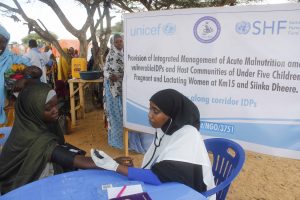
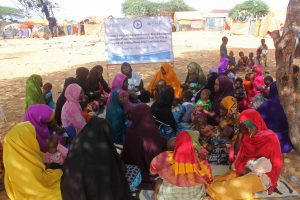
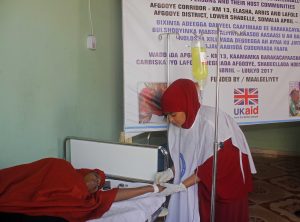
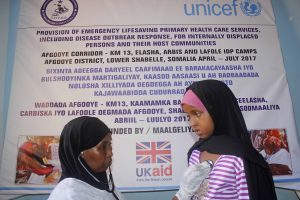
SOYDA is implementing emergency primary healthcare services as well as Nutrition program to prevent the further spread of the disease in conjunction with continuing polio immunization activities. SOYDA provides a package of curative, promotive and preventive nutrition and health interventions, while strengthening the implementation capacity of project staff. Lifesaving initiatives are promoted by increasing access to safe motherhood services, promoting emergency vaccine preventable disease; referral and immunization services as well as the antenatal and postnatal services, therapeutic feeds, Vitamin A supplementation, deworming and multiple micronutrient supplementation to drought affected vulnerable mothers and maintaining immediate response to capacity build project staff and community health workers in the target locations in KM 13, Km15, Siinkadheer, Arbis, Lafole, Elasha and Kordmac IDPs in Daynile District, Benadir Region
SOYDA is continuous providing emergency primary health care services integrated with nutrition OTP program to enable avert the multiple crisis affected mothers and children under five (boys and girls) in our target areas, and a lot of improvement and scale up had been done since March with the support of SHF, UNICEF and DFID.
- Program effectiveness.
Between 1st – 30th May 2017, a total of 12,756 cases of communicable disease were treated at SOYDA health facilities having respiratory tract infections particularly pneumonia, skin diseases, UTI and chronic non-communicable diseases including hypertension and diabetes. Predominantly in children under- boys and girls.
SOYDA interventions came at a time when communities were in need of nutrition and health interventions, opportunities, as well as protection against rampant violations in the IDPs camps. Assessments conducted by SOYDA have shown that IDPs were particularly vulnerable to rape by armed men including government soldiers and militia members. The projects have showed reports of defaulters are low this month comparing to April as well due mass community sensations in the rural areas compared to the urban population. The overall program management was assured by strong capacities in planning, implementation and monitoring through a very qualified and well-organized team and leaderships in Lower Shabelle and Banadir region. It worked through integration of health and nutrition programs in which SOYDA was also in partnership with UNOCHA, DFID and UNICEF Somalia. Clear targeting and selection strategies, program implementation plans, strategies and targets, and program exit and handover strategies were developed and documented. During the community meeting, it was clear that majority of local stakeholders involved.
Currently SOYDA have develop community compliant mechanism in which the community members and the project beneficiaries have a mechanism or channel to raise their concern and an appropriate response given to the issues raised through well-coordinated SOYDA internal memos, this has enhanced the community and the organization cordial working relationship that has fostered an improved information sharing.
SOYDA program management ensures that the vulnerable pregnant and lactating women and children under five boys and girls have easy access to quality affordable and adequate nutrition and health lifesaving intervention that has since ensured improved nutrition services update among the project beneficiary target group hence reaching over 85% of the program target population in both the OTP and mobile clinics. The integrated health and nutrition intervention has enabled it to provide the program efficiency and effective management of the severely acute and medically complicated cases of children under five and pregnant and lactating mothers who are primary target in nutrition intervention.
SOYDA program is however; prioritizing to provide immediate lifesaving and life sustaining integrated health, WASH and nutrition intervention in the target locations.
- Program activity achievement.
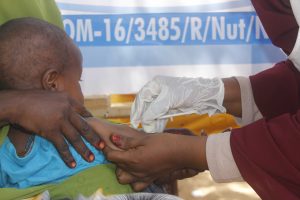
In this reporting months, SOYDA has successfully conducted 5 days mass measles campaign vaccination that was aimed at reaching these families whose children were not able to get the opportunity and were displaced by the drought as well as the host communities in Afgooye corridors .The mass vaccination campaigned reach a total of 18,000 children under the age of five years.
To ensure every child is reach SOYDA has trained a total of 190 Technical teams, Non-technical teams, and Social mobilisers on mass mobilization on emergency measles vaccination, Vitamin A supplementation and deworming for a target of 18,715 U5 Children in the Afgooye Corridor. In the project target location. This was able to provide a successful vaccination exercise during the five days measles campaign period, which in itself was successfully completed in Afgooye corridors. 18,263 (98%) under five children were vaccinated and also provided vitamin A supplementation, also 15,254 (92%) under five children were providing deworming tablets during vaccination campaign.
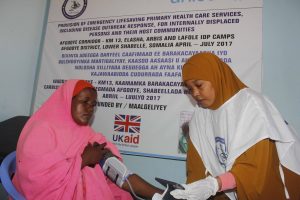
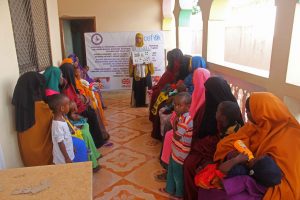
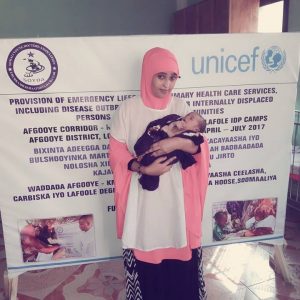
SOYDA mobile clinic and OTP centers in Afgooye received a total of 2157 pregnant and lactating women attending antenatal care (ANC) will all comprehensive ANC visit, 233 of them were giving TT1-6 vaccine. The mothers were attended to qualified SOYDA nurse and midwives in the project location and were provided with counseling on the safe motherhood practices and don’t and dos of the pregnancy complications. This has enhanced the mother’s knowledge and behavior to attend to the emergency primary healthcare
The total numbers of skilled care deliveries continued to rise across months; the proportion of skilled care deliveries was 88% as reported by SOYDA mobile clinic indicator tracking report from January to May 2017. The project supported activities fostering skilled care deliveries and there were 304 skilled care deliveries conducted from May 2017 in the facilities supported by SOYDA project. The increase in numbers is probably a result of the continuous door-to-door mobilization technique used by the CHWs and the improved attitude of health facility staff.
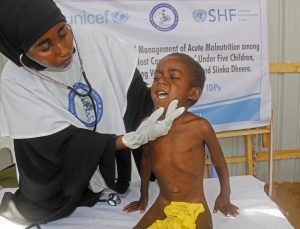
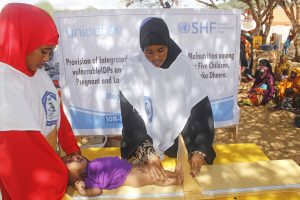
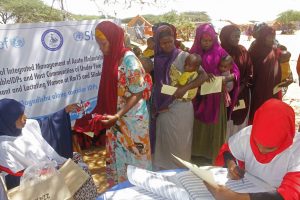
SOYDA is continuously carrying out active community screening and referral to the OTP in the project location. During this period SOYDA screened, identified and treated 723 children under five with severely malnourished case in the five mobile OTP sites and as well as referred 32 children (15 boys and 17 girls) to Elasha SOYDA health center facility for medical treatment. A total of 5 children <5 (2 boys and 3 girls) defaulted during the months of May 2017 due to the nature of the pastoral communities who happened to migrate to areas where rains were much better than Afgooye corridors, the community health workers are undertaking tracing of such defaulters to enable linked them with other humanitarian actors in the area.
For routine vaccination, 3644 under five children have been vaccinated on measles, also Vitamin A and micronutrient routine supplementation have been provided to 3644 children under five and 2679 have been dewormed in this reporting months. Due to the drought in most part of Daynile and Afgooye corridor rural areas where SOYDA has health and Nutrition programs. SOYDA ensures that the entire target in children in the programs have been integrated with the OTP services and hence this helps in ensuring proper integration of the programs.
In this reporting period, the project has reached a total of 109 children under five (boys and girls) with diarrhea have treated and received deworming services as well as multiple micronutrient supplementation, this has helped the nutrition status of these vulnerable population in KM 15, Elasha, Arbis and Lafole SOYDA project sites. On the same note 88 children Under-5 with suspected pneumonia treated with antibiotics through the facilities and mobile clinics. However, integration of nutrition and health has helped the community members have better lifesaving nutrition and health services with easy access to the facilities and mobile sites.
A total of 3,542 pregnant and lactating have received improved IYCF/NHHP counselling sessions that have an able them learn the best nutrition practices on childcare. The project has also provided the caregivers/women with better nutrition education, this made most of the target beneficiaries have better information and skills on the child management as well as better their understanding of the program deliverables. However, continuous mass screening and referral response as well as treatment of children 6 -59 months with improved nutrition and health intervention have reach 85% of the target vulnerable population in in KM 13, Km15, Siinkadheer, Arbis, Lafole, Elasha and Kordmac IDPs in Daynile District, Benadir Region project sites. SOYDA have provided continuous monitoring and supervision services to ensure the program delivered the required services and to enable provide more holistic intervention to the vulnerable group within the community in the target location.
SOYDA community health workers have gained skills and knowledge in handling the community cases and referral services and hence this has enable the community health workers have better coordination and effective response to the program activities
- Challenges/Constrains.
Some of the bottlenecks experience during this reporting period is as follows:
- During the measles vaccination campaign week in May 2017 there was some areas where community members had poor perception about the vaccine but with help of religious leaders and community elders SOYDA managed to carry out the exercise.
- Low literacy among the caregivers compromised the earlier seeking health and nutrition service provision hence some cases of relapse in the static OTP site at Elasha and Arbis project location.
- Poor community behaviour in vaccinating of their children was also noted, The community members only respond to vaccinates their children when such mass campaign is on due however, on the normal days the community members shy away taking their children to the clinics and this is rampant in the rural areas of Afgooye.
- Lack of alternative livelihood by the IDPs and the affected host communities hence this posing a greater impact on high number of malnourished children in the program areas.
- Lesson learnt.
The following were some of the lesson learnt during this reporting period, that is:
- Integration of health and nutrition program provide quality lifesaving emergency primary health care services, this was evidence in SOYDA health and nutrition program sites where the children get full packages of basic nutrition support package as well as the required health care treatment hence improving the life of the vulnerable population in the area of intervention.
- Improved coordination among the health and nutrition humanitarian actors improved the quality of the programs and hence provides the beneficiaries the right services within the stipulated period.
- Government supportive supervision and leadership of the federal ministry of health is paramount in ensuring an inform decision is made to save the life of children hence this was the case in Daynile and Afgooye corridors.