- Executive summary.
The continuous draught is still ravaging most part of the regions, this has however, and increase continues displacement of the population in Afgooye corridors as well as the Mogadishu IDPs. Accordingly, the health and nutrition services needs have been increasing due to increased number of severe and acute malnutrition of children displaced from the far insecure regions of Lower and middle Shabelle. A lot of huminaterian assistance have been done and things imporving compare to couple of months ago.
Somalia is still under serious threats on nutrition and health that result from consequent drought in the past years and this has led to high number of under-five mortality rates (U5MR) in the country which stand at 137 Per 1,000 lives birth which contributes to poor maternal and child under nutrition hence one third of child deaths. However, Banadir region records 18% severe acute malnutrition above the global threshold of <15% hence the risk of mortality among children due to high levels of chronic and acute malnutrition increase the exposure to, duration, and severity of various morbidities, which put an excessive load on the health system.
Despite improved scale up of health and nutrition activities the target areas in Afgooye district and Mogadishu IDPs still have high number of children with SAM and MAM cases. However, this was attributed to the limited livelihood and water, sanitation services that could have otherwise integrated within the nutrition and health programs.
In this reporting quarter, it is confirmed an increasing trend of persons with reduced food intake, as well as the risks associated with acute malnutrition, illness (morbidity) and death (mortality) among the most exposed and vulnerable groups, especially young children and lactating women. The impact of the drought is however, evident with the already vulnerable communities with no intervention on livelihood program that will have help the families have access to foods on their table thus this is increasing further vulnerability as well as defaulting of children from the nutrition and health centers.
SOYDA, is however, continuing its health, WASH and nutrition intervention through providing the life-saving primary health care as well as educating the caregivers on best health and nutrition best care practices as well as taking their children to the appropriate and timely vaccination in the project areas.
- Program effectiveness.
The overall program management was assured by strong capacities in planning, implementation and monitoring through a very qualified and well-organized team and leaderships in Lower Shabelle and Banadir region. It worked through integration of health programs in which SOYDA was also in partnership with SHF, DFID and UNICEF Somalia..
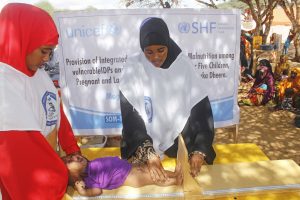
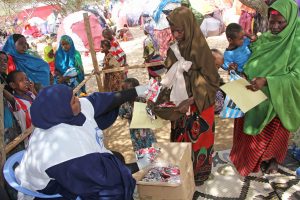
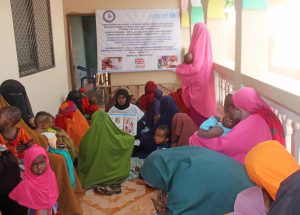
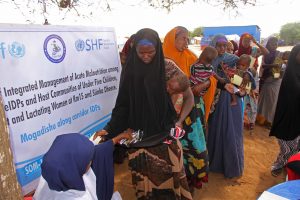
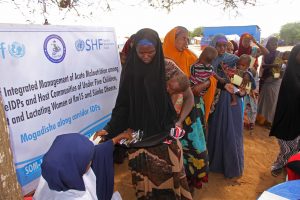
The program adopted an effective participatory approach for assessing community needs and designing the interventions. The technical designs and choice of interventions considered the needs of the beneficiaries and technical viability of the structures in the different geographical locations. Supplement distribution (RUTF) involved the beneficiaries directly by engaging them through mobile and static nutrition interventions as well as mobile clinic, an excellent approach that provided immediate lifesaving and life sustaining health and nutrition intervention in the target locations.
The program produced important immediate results that show high prospects for larger impacts. Within its limited scope, the program reached vulnerable households as well as enabling equitable access to essential health and nutrition services. During the program implementation, the community members expressed their satisfaction, and it was clear their relationship was very good. The community nutrition education improved health and nutrition seeking behaviour of the communities, through the effective community health workers engagement on daily screening and referral as well as the traditional birth attendance who have visited the homes time to time in order to ensure the pregnant mothers deliver safely at SOYDA facilities.
Through the community health workers the project was able to reach the community members and provided the services to their doorstep, this has led to decreased in AWD/cholera related disease reported high before the initiation of the project.
The project has recorded a successful implementation of the target beneficiary and it has since reach a total of 5,866 children under five and pregnant and lactating women as well as the elderly and other community members during this reporting time. However, due to devastating continuous drought affecting the larger part of the region lead to displacement of vulnerable pastoral communities to the already overstretched IDPs in the target locations, this has created high admission to both facility as well as the mobile clinics in SOYDA project sites.
More significantly, the organization is on top of the intervention where it gives high case managements at facilities in KM 13, Km15, Siinkadheer, Arbis, Lafole, Elasha and Horsed, Halgan and Kordamac IDPs in Daynile District, Benadir Region. This is through the funding from UNICEF, CHF and DFID and has realy facilitated the the response to the vulnerable population. Since the beginning of the year SOYDA have noted significant influence on child nutrition of particular concern are feeding practices (such as the low rates of exclusive breast-feeding in the first 3 months and the low frequency of active feeding of infants) and inadequate hygiene practices relating to food preparation
- Program activity achievement.
The following were some of achievement recorded in this quarter (April to June), they includes:
- A total of 26,445 number of crisis affected women, children and Men in emergency was reached with improved life-saving primary health care services, However, integration of nutrition and health have helped the community members have better lifesaving nutrition and health services with easy access to the facilities and mobile sites.
- SOYDA conducted mass measles campaign in May and was able to reach a total of 18,263 (98%) under five children were vaccinated and also provided vitamin A supplementation, also 15,254 (92%) under five children were providing deworming tablets during vaccination campaign. This has contributed to enhance emergency primary health care services to the vulnerable children in the target location.
- Through this quarter a total of 18,263 (98%) children both boys and girls with vitamin A supplementation services.
- The routine immunization in the project sites was able to reach a total of 6227 children segregated into boys, girls, <1 year 1,969 and >4,258.This enhances the quality of the program beneficiaries specially the vulnerable AWD/draught affected children in the targeted population. This translates 46% coverage of the target program beneficiaries.
- In this reporting quarter the project was able to provide continuous Pentad 1 and 3 targeting under five children hence a total of 2,248 children were provided with Penta routine immunization.
- Through the continuous capacity development and on job training of the technical and project staff the project was able to provided capacity development and training opportunity to project staff through which it has conducted 4 training component in this reporting quarter hence trained a total of 45 Community health workers and project staff on IYCF/NHHP, 45 project staff on IMAM effective program services delivery,25 project staff on EPI to enable them understand the basic IMAM/EPI integration services in the current health and nutrition sites with UNICEF support, on the same quarter under the SHF nutrition project a total of 39 project staff were trained on effective and efficient IMAM program management services delivery. All this has contributed to the enhanced staff skills and knowledge that led to improved quality program implementation modalities.
- Skilled delivery is the core of primary health care services thus the project was able to record success in both facilities and at home services with informed knowledge of the mothers in the target areas of the available facilities for safe motherhoods hence this quarter a total of 609 safe delivery were conducted in SOYDA health and Nutrition facilities. This improvement was also attributed closer coordination between the program outreach team as well as community traditional birth attendants in the project areas.
- Within this quarter a total of 785 pregnant and lactating mothers have attended antenatal care (ANC 1st visit) in this reporting period and has since completed all the 4 comprehensive ANC visit. The program has recorded success in all reaching the vulnerable mothers with improved maternal health care services in both facilities and outreach sites program.
- On the same reporting period a total of 866 women of reproductive age have received family planning counseling on suffer methods, hence improving the mothers birth spacing knowledge. The community health workers are continuously conducting community sensitization and education in the project areas. 489 pregnancy women also provided TT1-5.
- Through the community health workers active community case management and community outreach engagement the project was able to provide multiple micronutrient supplementation to 4,654 pregnant and lactating women hence enhancing the mother’s health and nutrition status of the target beneficiaries.
- Challenges/Constrains.
Some of the bottlenecks experience during this reporting period are as follows:
- Increased number of beneficiaries due to increased number of displaced person as opposed to baseline target beneficiaries in the target district hence resources constrain.
- Limited TSFP and WASH facilities in the target location hence poor hygiene and sanitation promotion services.
- Low literacy among the caregivers compromised the earlier seeking health and nutrition service provision hence some cases of defaulting and relapse reported in the static OTP site at Elasha and Arbis project location.
- Lesson learnt & human story.
The following were some of the lesson learn during this quarterly reporting period.
- Strong coordination between the community health workers and community members to enable improve in reaching the vulnerable members in the target location.
- Continuous on job training will enhance the capacity and skills of the community health staff and hence improve service delivery in the target areas.
- A strong supportive supervision on both government level as well as programmatic management side enhances the effectiveness of the local staff capacity in ensuring all is attended to per the quarterly plan.
- Effective implementation and sustainable interventions requires participation of both stakeholders.
Annex 1.1: Success stories.
12 –Days of treking for assistance to saved my son- Story by Shukri Noor
“The militia groups in the interior of the lower shabelle regions made my child to suffer,” Said Shuri Noor a mother of 35 years old from Darkambis village 40 kilometer from Arbis town of Afgooye district.We leaved a confortable rural life before the drought happened”, said Shukri.
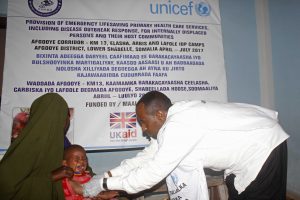
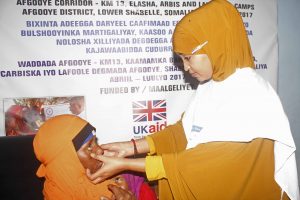
Picture 1: SOYDA nurse examining Husni Hadi at initial admision stage. Pict 2: After the discharge period.
Shukri a 35 years mother traveled from restricted areas under the controls of Al shabab to seek treatment for her 3 years old Husni Hadi.Shukri narration of her suffering to save the life of her son was astonishing, “ I left Darkambis at 3am in the morning with my 4 kids” said Shukri still shivering from the traumer she under went. To avoid the harassment of the AS I left the village and trek for hours to ensure that my children get the treatment they required” Shukri continues to narrate her story to SOYDA facility head nurse.
Mrs Shukri son was in poor health and nutrition status, the severely malnourished Khalif, was lifeless and had all the medical complication such diarhea, skin rushes and pneumonia as well as poor appetite upon arriving Siinka Dheer OTP center.SOYDA health and nutrition staff were quick in the response and ensure that the child get the treatment required.
The mother was full of joy after her son was put into treatment in two days was able to show a recovering signs.” Thanks for your quick assistance to save my child” Said Shukri.
Shukri spent two and half months within SOYDA OTP sites and upon her son recover she move to the IDPs centers in KM 13 in which the community health workers make their follow up with the child…..“ security and freedom of seeking services is the beginning of better life” said Shukri upon realizing he child recovered from the severe acute malnutrition.
A kilometer walk in search of humanitarian help-A story by Halima Abdille in Afgooye.
At the admission of the Halima daughter at Elasha SOYDA OTP center.
Picture shows after the treatment in OTP and discharged.
At the onset of the drought in Somalia Halima Abdille a mother of three was residing in the far rural areas of Lower Shabelle with her children and animals, Halima was a single mother and her husband passed away towards the end of December, 2016.However she was the bread winner of her kids with little animals left with her husband. With the devastating severe drought she lost her only family livelihood and could not managed to fed her children and decided to move to where she can get her help, upon arriving at Afgooye district rural homes Halima youngest daughter was severely malnourished and could not help to move any further since she had no means of transport and decided to stay with a relative
In the state of confusion for the status of her daughter SOYDA outreach team met her in desperation and she narrated the ordeals she faced in trekking away with no food and water, “Likely am here today though my daughter is in pain” she say to SOYDA outreach team supervisor, Halima continues to narrated her story “I have lost all I have and since my children are orphan I have no one to help” said Halima. Upon assessing the daughter, SOYDA team provided her the referral services to KM13 and her daughter was able to get the required treatment, “I cannot stop thanking Somali young doctors services, it is awesome,” Said Halima when her daughter fully recovered and discharged.