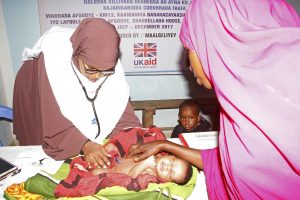
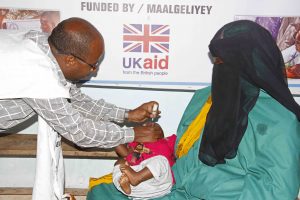
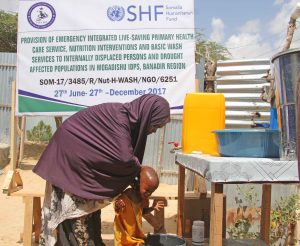
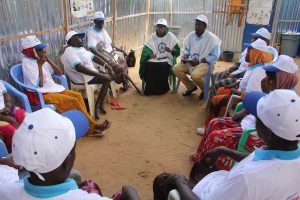
The below normal Gu rain in 2017 as well the continuous dough affecting the population in Banadir region have adverse effect to the life of the vulnerable population in the target population. However, SOYDA have been providing the nutrition, WASH, protection, and health intervention in both Mogadishu IDPs as well as the Afgooye corridor district.
Despite the continuous scale up of the emergency primary and nutrition program the needs on the ground is still growing since there are continuous displacement from areas control by Al Shabab and the rural settlement from Lower Shabelle region and other neighboring middle Shabelle hence increasing the risk of AWD/cholera outbreak compared to the previous months.
 SOYDA shall however, continue its program implementation to enable reduce the vulnerability as well as provide improved lifesaving nutrition and health services.
i. Program effectiveness.
The overall program management was assured by strong capacities in planning, implementation and monitoring through a very qualified and well-organized team and leaderships in Lower Shabelle and Banadir region. It worked through integration of health programs in which SOYDA was also in partnership with SHF, DFID and UNICEF Somalia.
The program adopted an effective participatory approach for assessing community needs and designing the interventions. The technical designs and choice of interventions considered the needs of the beneficiaries and technical viability of the structures in the different geographical locations. Supplement distribution (RUTF) involved the beneficiaries directly by engaging them through mobile and static nutrition interventions as well as mobile clinic, an excellent approach that provided immediate lifesaving and life sustaining health and nutrition intervention in the target locations.
The program produced important immediate results that show high prospects for larger impacts. Within its limited scope, the program reached vulnerable households as well as enabling equitable access to essential health and nutrition services. During the program implementation, the community members expressed their satisfaction, and it was clear their relationship was very good. The community nutrition education improved health and nutrition seeking behaviour of the communities, through the effective community health workers engagement on daily screening and referral as well as the traditional birth attendance who have visited the homes time to time in order to ensure the pregnant mothers deliver safely at SOYDA facilities.
Through the community health workers the project was able to reach the community members and provided the services to their doorstep, this has led to decreased in AWD/cholera related disease reported high before the initiation of the project.
i. Program activity achievement.
The following were some of achievement recorded in this months, they includes:
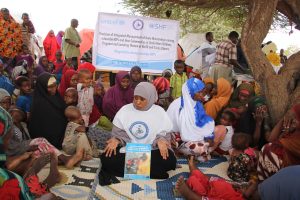
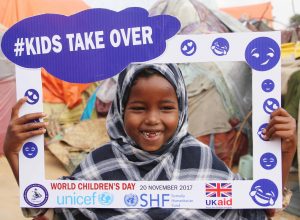
• SOYDA organized a celebration of World Children Day through direct engagement of IDPs in Mogadishu and Afgooye corridor, SOYDA have accelerated its effort in reaching vulnerable reach with improved access and utilization of integrated life-saving Nutrition, Health, WASH, Protection and livelihood in IDPs and host communities, However, the children are happy with available care service as well as the community members appreciating the timely and quality interventions.
• SOYDA Launched today 16 Days of Activism for non-violence against Women and children campaign on 25 November (International Day for the Elimination of Violence against Women) to 10 December (Human Rights Day). The campaign hopes to raise awareness about gender-based violence as a human rights issue as well as giving special consideration to people on special needs including disable people. The theme of the campaign for 2017 is “Leave no one behind: end violence against women and girls.” Our campaign started all our health facilities in Benadir and Lower Shabelle Region which aims to raise community awareness and mobilize people everywhere to bring about change through targeting Community leaders, Youth Symposium and Women entities to discuss prevention of GBV and the role of youth and women to GBV prevention. Its time to galvanize action to end violence against women and girls.
• SOYDA organized community IDPs event to mark the 3rd December 2017, International day of persons with disabilities, which we aimed to promote empowerment, inclusion and access to reduce inequalities in society. It also seeks to increase awareness of gains to be derived from the integration of persons with disabilities in every aspect of political, social, economic and cultural life.
• A total of 16,098 number of crisis affected women, children and Men in emergency was reached with improved life-saving primary health care services, However, integration of nutrition, WASH, protection and health have helped the community members have better lifesaving nutrition and health services with easy access to the facilities and mobile sites.
• Through the facility and outreach program sites SOYDA was able to reach a total of 3289 children under five boys and girls for vitamin A supplementation to enable enhance the vulnerable children nutrition status. This has since be able the program to reach more than 85% of the monthly coverage under five children thus indicating greater progress to the set indicators within the program.
• SOYDA continuously conducting routing immunization in all the project target sites for health and nutrition however, in this reporting months, it was able to reach Routine measles immunization in both the facility base as well as outreach mobile services hence the program have been able to reach a total of 2, 678 children. This has since improved the quality of the target beneficiaries in all the program areas.
• Skilled delivery is the core of primary health care services thus the project was able to record success in both facilities and at home visit for the traditional birth attendance hence encourage facility delivery and passed knowledge and information to the mothers in the target areas for safe motherhoods hence this reporting month a total 290 safe delivery were conducted in SOYDA health and Nutrition facilities. This improvement was also attributed closer coordination between the program outreach team as well as community traditional birth attendants in the project areas.
• The project was able to attend to a total of 2,145 pregnant and lactating mother’s antenatal care (ANC 1st visit) in this reporting period and has since completed all the 4 comprehensive ANC visit. The program has recorded success in all reaching the vulnerable mothers with improved maternal health care services in both facilities and outreach sites program.
• On the same reporting period a total of 224 women of reproductive age have received T1-T5. The community health workers are continuously conducting community sensitization and education in the project areas.
• Through this reporting months a total of 1321 <5 children received penta 1-3 in both the mobile outreach project sites as well as the facility base program sites, this has since provided the target beneficiaries enhance access to feasible emergency integrated nutrition and primary health care services.
• 1879 Children and PLW were provided acute malnutrition treatment and also provided IYCF and NHHP counseling during this reporting period.
• 157 Hygiene kit distributions were done to the discharged CTC patients.
• On GBV responses, 134 cases (27 girls, 2 boy and 104 women) were provided STI treatment, basic emotional support and psychosocial support.
ii. Challenges/Constrains.
Some of the bottlenecks experience during this reporting period is as follows:
• Limited funding with high number of beneficiaries in the program sites. This is due to the short time program funding, Particularly the end of SHF Nutrition fund in Km15 and Siinka Dheere and also SHF Health Project in Daynile district.
• High number of displaced person from drought affected areas.
iii. Lesson learnt.
The following were some of the lesson learns during this quarterly reporting period.
• Strengthen and improve nutrition communication and advocacy through National and sub national cluster.
• Supportive supervision and closer coordination with Federal MOH and other humanitarian actors have provided better service delivery as well as improved project staff capacity.